Showing posts with label brine. Show all posts

Thursday, July 28, 2016

Summertime Quick Pickling

As we sweat through the dog days of summer, it's easy to forget that the cold bite of winter will soon be upon us. While it's not possible to bottle up the warmth of the season, it is possible to capture the taste of summer by pickling some of your vegetables. It's not as hard or time consuming as you would think, it's a great way to savour the bounty from local farmer's markets, and it adds a little something to a meal no matter what season.


Ingredients / Equipment

vegetables (cucumber; baby carrots, cauliflower, green beans, okra, onions, radishes, zucchini)
equal parts water and vinegar (enough to cover the vegetables, ratio can be adjusted according to tastes)
30 g granulated sugar
30 g kosher salt
15 g brown mustard seeds
5 g whole black peppercorns
1 bay leaf
enough canning jars for your vegetables
  1. Pack your vegetable of choice tightly in a glass jar, leaving about 1 cm of room at the top. Place each vegetable in its own jar as vegetables pickle differently and at different rates.

    Note: Crunchy vegetables, like carrots, should be boiled a little before pickling; delicate vegetables such as cucumber and zucchini, don’t need to be cooked ahead of time.
  2. Toast the mustard seeds and peppercorns in a saucepan over medium heat for about two minutes, or until fragrant . Add the remaining ingredients and stir until the sugar and salt have dissolved, and bring the mixture to a boil.
  3. Pour the brine into the jar immediately, covering the vegetables completely. Allow about an hour for the mixture to cool to room temperature, then tightly seal the jar. Shake it or rotate it to evenly distribute the brine and spices, then store in the refrigerator for at least 24 hours and preferably a week before using. Your vegetables should last for about a month.

Friday, October 10, 2014

Want a Moist Turkey? Brine it!

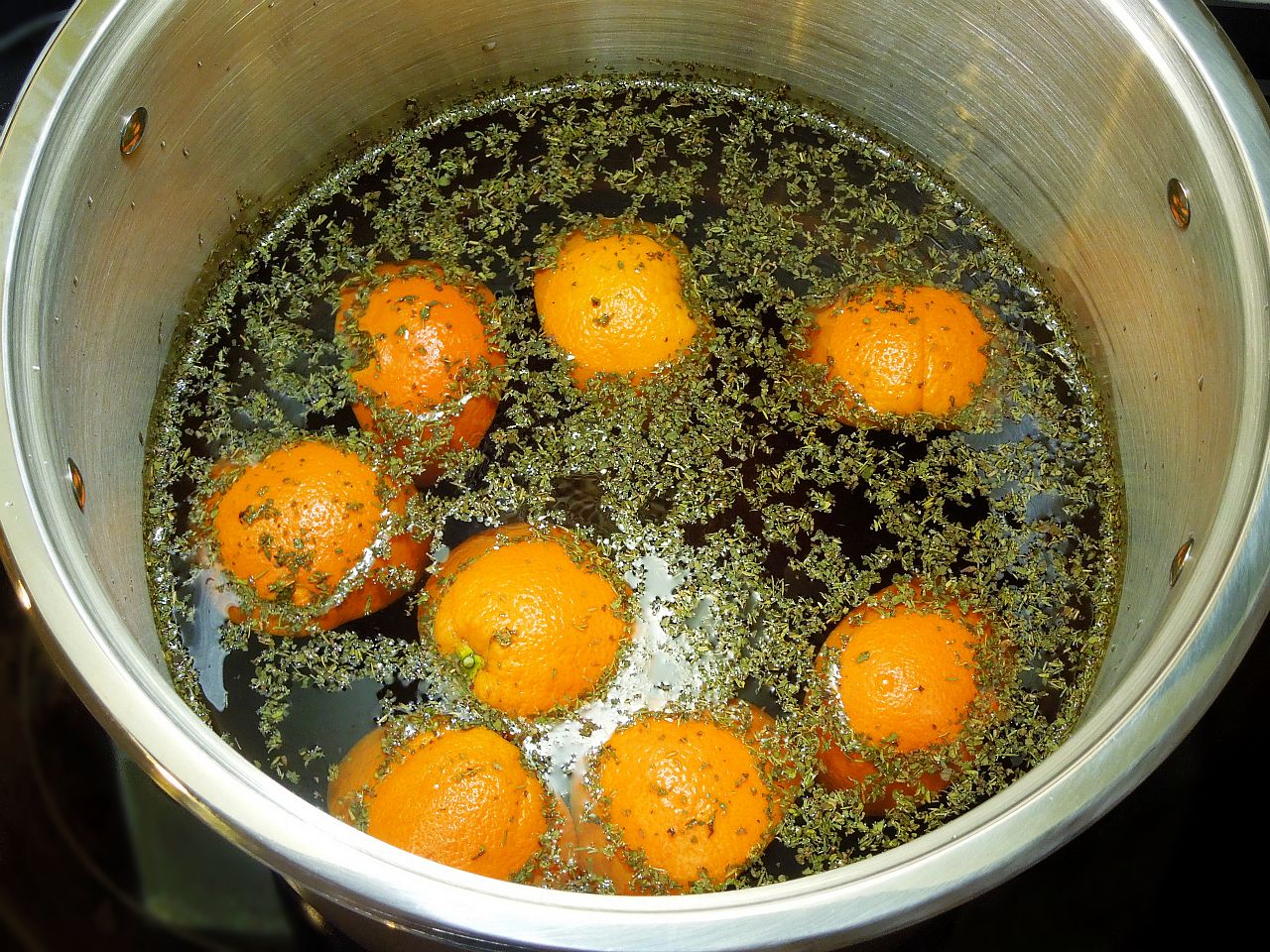
With Thanksgiving around the corner, the goal of whoever is cooking the turkey is to make sure the bird is moist and tender. This can be done by brining your poultry, a simple method of marinating the bird in a salt solution infused with aromatic herbs, spices, fruits and vegetables. The salt changes the structure of the muscle tissue in the meat which allows it to swell and absorb water and flavourings which results in tender meat once cooked. Here's the method I used when I brined the turkey for the Franklin family meal last Christmas:
Ingredients
cold water
1/2 cup (125 g) Kosher salt
1 cup (200 g) light brown sugar
2 cups (473 mL) boiling water

NOTE: The brining process takes time, so if you plan to do this, consider starting the day before you plan to cook the turkey. If the turkey is frozen, thaw it according to the package directions before brining.
  1. In a pan on the stove, dissolve the salt and brown sugar in 2 cups of boiling water (or vegetable stock). Allow the mixture to cool in either the freezer or overnight in the refrigerator, depending on your time constraints.
  2. Pour the brine solution into a food-grade container large enough to hold the turkey, and enough cold water to cover the bird. Add your favourite dried spices (i.e. a tablespoon of sage, oregano, thyme, rosemary, basil, cinnamon) and seasonings (i.e. peppercorns, garlic cloves). Feel free to substitute some of the water with cold tea, lemon or orange slices, fruit or vegetable juices, cider, wine or beer.
  3. Untie your turkey, and remove the giblets from the neck cavity and the neck from the body cavity. Trim away any large areas of fat or excess skin around the body cavity, and cut off the tail. Wash the bird inside and out under cold water, rinse the bird thoroughly. Place the turkey into the brine, adding more water if necessary to completely submerge it. If the turkey keeps floating up, find a way to weigh it down.
  4. The turkey and brine solution must be kept below 40°F/4°C  during the brining, so stick your container in the fridge, or somewhere cool, like in the basement, for at least ten hours.  About halfway through the brining process, turn your poultry over to ensure an even brining throughout. Ice packs or reusable gel packs may be used to maintain the brine's cold temperature, but do not put ice directly into the solution as this will dilute the brine.
  5. Remove the turkey from the brine, rinse it inside and out under cold water, and dry the bird thoroughly using a kitchen towel. Allow to come up to room temperature for an hour before you plan to roast it to ensure proper and safe heat penetration. Then cook the turkey as normal.

Festive Holiday Baking

Are you a hybrid worker being forced to attend an office potluck?  Do you need a dessert for your child's Christmas bake sale?  Feel l...